
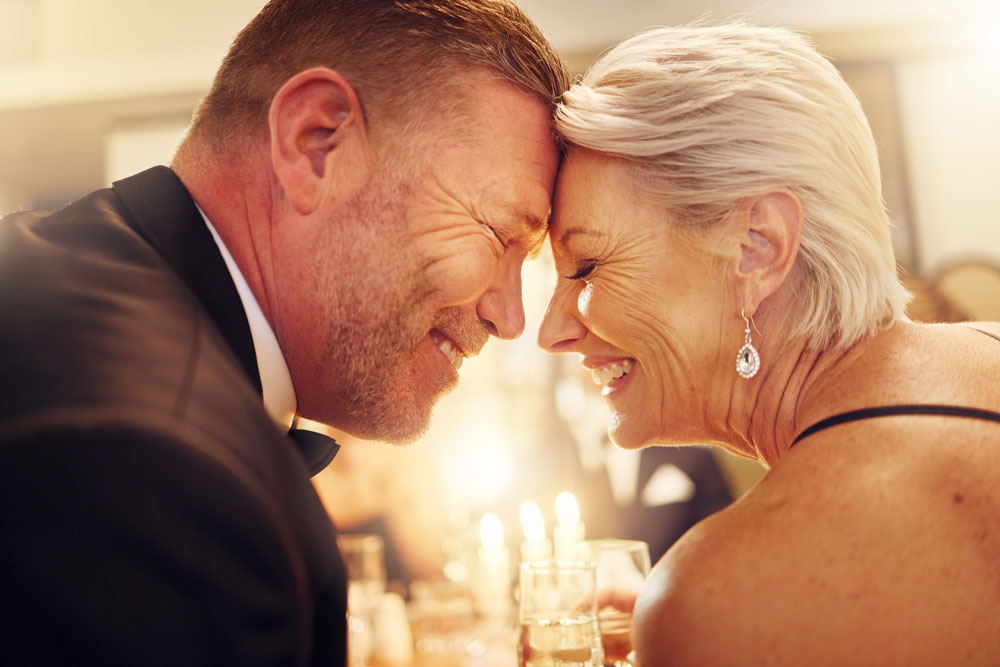
It is easy to dismiss a wedding anniversary as a date, a dinner booking or a yearly post on social media. Yet anniversaries usually mean more than that. They mark time, of course, but they also do something more subtle. They turn a marriage into something visible, shareable and remembered.
Research suggests that anniversaries matter because they work as rituals. In other words, they are repeated acts that carry meaning beyond the practical details. That is why the same meal, the same toast or the same photograph can feel surprisingly significant. The point is rarely the object itself. Instead, it is the meaning a couple and their wider family attach to it (Garcia-Rada, Sezer and Norton, 2019; Leeds-Hurwitz, 2005).
Anniversaries also sit at the meeting point of private life and public life. A marriage begins as a deeply personal bond, yet it is lived in front of other people. Families witness it. Friends respond to it. Children learn from it. Communities give it language and form. So when couples mark an anniversary, they are often doing more than celebrating survival or romance. They are saying, in one way or another, this relationship matters, this history matters, and we want to recognise it (Leeds-Hurwitz, 2005; Baxter and Braithwaite, 2002).
They turn time into meaning
A calendar date becomes powerful when people return to it again and again. That repetition matters. In relationship research, rituals differ from routines because they carry shared symbolic weight. A routine may be useful, while a ritual says something about identity. In one study, couples who saw certain repeated practices as rituals, rather than mere habits, reported more positive emotions and stronger relationship quality. Crucially, those benefits appeared when both partners recognised the act as meaningful. So an anniversary matters less because it is annual and more because it becomes a recognised marker of “us” (Garcia-Rada, Sezer and Norton, 2019).
That helps explain why even modest anniversary traditions can feel deeply important. A walk, a favourite meal or reading old cards may look ordinary from the outside. However, inside the relationship, those gestures gather meaning over time. They connect the present couple to earlier versions of themselves. As a result, the anniversary does not simply measure the years. It gives the years shape (Garcia-Rada, Sezer and Norton, 2019).
They make marriage visible
A public sign of a private bond
One of the clearest findings in the anniversary research comes from Wendy Leeds-Hurwitz, who studied wedding anniversaries as a public component of a private relationship. Her argument is simple and persuasive: anniversary rituals help make a marriage visible. That visibility often happens through stories. Couples and relatives retell how they met, what the wedding was like, what they have survived, and what the relationship has come to mean. In practice, those stories do not just entertain guests. They show the marriage to others and reaffirm it in front of them (Leeds-Hurwitz, 2005).
This public dimension is not trivial. Marriage has always had a social side as well as a personal one. Research on vow renewals reaches a similar conclusion. People who renewed their vows often framed marriage through ideas such as public accountability, social embeddedness and permanence. In other words, these rituals did not only express private affection. They also located the couple within a wider social world that recognised the bond and, to some degree, held it in view (Baxter and Braithwaite, 2002).
A modern display still follows the same pattern
Social media has changed the format, but not the underlying function. Anniversary posts may seem lightweight, yet they still work as public displays of commitment and identity. Research on anniversary greetings on Twitter found clear patterns in how people used emojis, photos and words to mark the relationship. Younger adults leaned more on symbolic emojis, while older and middle-aged adults used more verbal tribute, inspirational statements and humour. So although the medium has shifted, the impulse is familiar: people want to mark the relationship where others can see it (Reifman et al., 2020).
That does not mean public display is superficial. In related social media research, dyadic displays of a relationship have been linked to what researchers call relationship protection. By contrast with a private message, a visible post can signal commitment to the outside world and make romantic availability look less ambiguous. Not every couple values that, and not every public post is heartfelt. Even so, the broader pattern helps explain why anniversary messages still feel meaningful in the digital age (Reifman et al., 2020; Reifman et al., 2020; related dyadic display research).
They help families tell their story
Anniversaries do not only belong to the couple. They often belong to the family narrative too. Leeds-Hurwitz argues that stories told at anniversary gatherings can socialise children into family values and family membership. That matters because children rarely learn what a marriage means from abstract principles alone. More often, they absorb it through repeated family scenes, remembered jokes, shared history and the way older relatives talk about loyalty, difficulty, compromise and affection (Leeds-Hurwitz, 2005).
Broader family ritual research points in the same direction. A long review of family routines and rituals found links with parenting competence, child adjustment and marital satisfaction, although the evidence base was methodologically mixed. Meanwhile, those researchers emphasised that rituals do more than organise schedules. They also create an emotional climate and a sense of belonging. Therefore, an anniversary celebration may matter partly because it tells family members, including children, who they are together (Fiese et al., 2002).
A study of middle-aged married adults in Korea adds a more specific anniversary finding. It reported that wedding anniversary rituals were common, were typically celebrated regularly with family, and were positively associated with family health. The anniversary ritual also partly mediated the link between how important spouses considered their marital role and broader family wellbeing. That does not prove cause and effect. However, it does suggest that regular anniversary observance can help translate the idea of marriage into lived family practice (Choi, 2018).
They carry cultural meaning
Anniversaries also matter because they rarely stand alone. They sit within wider cultural ideas about marriage, family and continuity. Across many societies, marriage rituals carry values as well as feelings. They signal responsibility, mutual support, respect between families and the transition into a recognised social role. Studies of wedding ritual language in places such as Anatolia and Aceh show how ceremonial forms preserve shared values, social expectations and collective memory over time (Kartal, 2025; Muthalib, Fitrisia and Zahara, 2024).
It is worth being careful here. These studies focus on marriage rituals more broadly, not anniversary celebrations alone. Even so, they help explain why anniversaries can feel weightier than other yearly occasions. An anniversary draws some of its force from the original wedding and from the cultural meanings attached to marriage itself. So when couples celebrate ten, twenty or fifty years, they are often revisiting not just a date but a social promise that still carries symbolic value (Kartal, 2025; Baxter, 1987).
They can hold grief as well as joy
One reason anniversaries matter so much is that they remain emotionally charged even after a spouse dies. Research on older bereaved spouses found that occasions tied to the marriage, including wedding anniversaries, could trigger heightened grief, anxiety and depressive symptoms. In that sense, anniversaries act as emotional landmarks. They gather years of memory into a single point in time, and so they can intensify both love and loss (Carr et al., 2014).
This is important because it shows that anniversaries are not meaningful only when people celebrate them happily. They matter because they are woven into the relationship’s history. The same date can hold delight, pride, regret, longing or sorrow, depending on the couple’s story and stage of life. As a result, anniversaries reveal something true about ritual itself: it does not create emotion from nowhere, but it gives emotion a place to gather (Carr et al., 2014).
What the evidence really suggests
Taken together, the research points in one direction, but it is not all equally strong. Some studies are qualitative and interpretive. Some focus on one culture or one age group. One anniversary study is a cross-sectional survey, so it cannot show firm causation. Meanwhile, the grief research concerns older widowed spouses, and the social media work examines public posts rather than private feeling. So the evidence is suggestive and valuable, but not universal in a strict scientific sense (Leeds-Hurwitz, 2005; Choi, 2018; Carr et al., 2014; Reifman et al., 2020).
Even with those limits, the through-line is clear. Anniversaries matter because they help people organise memory, signal commitment, pass on values and revisit the meaning of marriage over time. In many cases, the celebration itself need not be elaborate. Research on rituals suggests that shared meaning matters more than scale. Therefore, what often gives an anniversary its force is not luxury but recognition: the sense that this bond deserves to be named, remembered and renewed (Garcia-Rada, Sezer and Norton, 2019; Leeds-Hurwitz, 2005).
Why they still matter now
Wedding anniversaries endure because they answer a human need. People want markers in time. They want chances to tell the story again. They want to say, quietly or publicly, that a relationship has a past, a present and, one hopes, a future.
That is why anniversaries often matter even to couples who claim not to fuss about them. The meal may be simple. The card may be brief. The post may be a single photograph. Yet the act still says something steady and recognisable: we are here, this is our shared history, and it is worth honouring. In a life that moves quickly, that small yearly pause can carry remarkable weight.
References and further reading:
- Baxter, L.A. (1987) ‘Symbols of relationship identity in relationship cultures’, Journal of Social and Personal Relationships, 4(3), pp. 261–280. doi: 10.1177/026540758700400302.
- Baxter, L.A. and Braithwaite, D.O. (2002) ‘Performing marriage: Marriage renewal rituals as cultural performance’, Southern Communication Journal, 67(2), pp. 94–109.
- Carr, D., Sonnega, J., Nesse, R.M. and House, J.S. (2014) ‘Do special occasions trigger psychological distress among older bereaved spouses? An empirical assessment of clinical wisdom’, The Journals of Gerontology: Series B, 69(1), pp. 113–122. doi: 10.1093/geronb/gbt061.
- Choi, B. (2018) ‘Effect of middle-aged spousal role importance and wedding anniversary ritual on family health: focus on the mediating effect of wedding anniversary ritual’, Journal of Tea Culture & Industry Studies, 41, pp. 145–178. doi: 10.21483/qwoaud.41..201809.145.
- Fiese, B.H., Tomcho, T.J., Douglas, M., Josephs, K., Poltrock, S. and Baker, T. (2002) ‘A review of 50 years of research on naturally occurring family routines and rituals: Cause for celebration?’, Journal of Family Psychology, 16(4), pp. 381–390. doi: 10.1037/0893-3200.16.4.381.
- Garcia-Rada, X., Sezer, O. and Norton, M.I. (2019) ‘Rituals and nuptials: The emotional and relational consequences of relationship rituals’, Journal of the Association for Consumer Research, 4(2), pp. 185–197. doi: 10.1086/702761.
- Kartal, A. (2025) ‘Cultural codes of marriage rituals in Anatolia: From ritual to word in the context of oral culture’, Religions, 16(6), article 716. doi: 10.3390/rel16060716.
- Leeds-Hurwitz, W. (2005) ‘Making marriage visible: Wedding anniversaries as the public component of private relationships’, Text – Interdisciplinary Journal for the Study of Discourse, 25(5), pp. 595–631. doi: 10.1515/text.2005.25.5.595.
- Muthalib, K.A., Fitrisia, D. and Zahara, N. (2024) ‘Ceremonial language and social cohesion: An analysis of Seumapa in Acehnese wedding traditions’, Studies in English Language and Education, 11(2), pp. 1231–1247. doi: 10.24815/siele.v11i2.29512.
- Reifman, A., Ursua-Benitez, M., Niehuis, S., Willis-Grossmann, E. and Thacker, M. (2020) ‘#HappyAnniversary: Gender and age differences in spouses’ and partners’ Twitter greetings’, Interpersona: An International Journal on Personal Relationships, 14(1), pp. 54–68. doi: 10.5964/ijpr.v14i1.3799.