
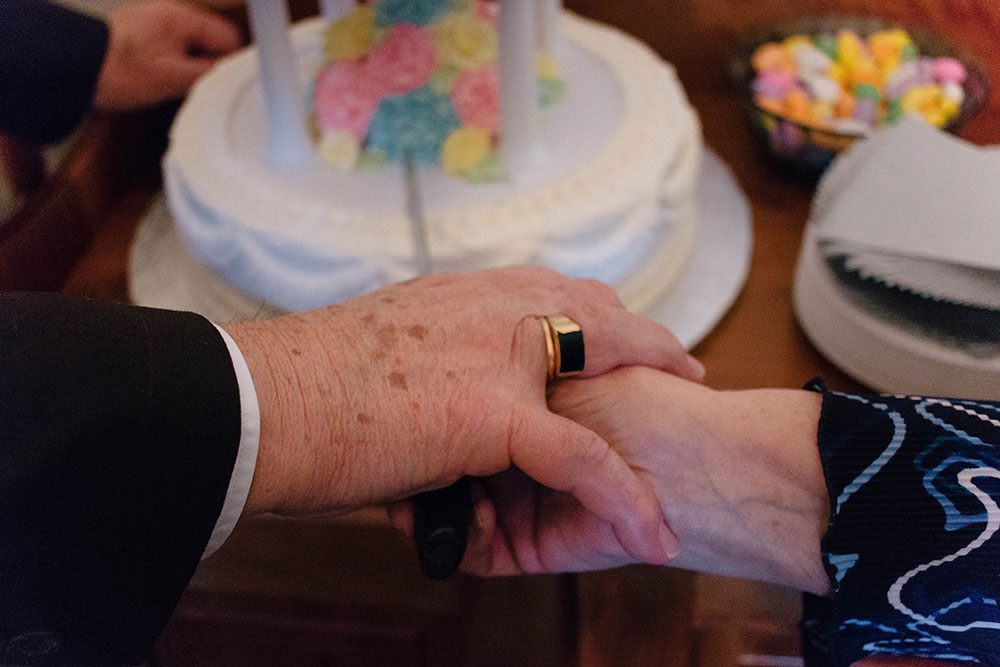
Wedding anniversaries are, in one sense, undeniably traditional. They return each year, often with familiar gestures: a card, a meal, a gift, a story retold across the table. However, tradition does not have to mean empty habit. In many relationships, the very act of marking time together can carry emotional weight, because it invites couples to pause, notice what they have built, and recognise the marriage as something worth tending to. Direct research on ordinary anniversary celebrations is still quite limited, so there is no tidy scientific verdict. Even so, the wider evidence on relationship rituals, marital satisfaction and romantic milestones suggests a more interesting answer than a simple yes or no. Anniversaries are largely tradition, but in many cases they can also support closeness, continuity and relationship quality (Lemaster, 2013; Karney and Bradbury, 2020; Garcia-Rada, Sezer and Norton, 2019).
Why tradition should not be dismissed
It is easy to talk about tradition as though it were the opposite of meaning. Yet rituals often matter precisely because they are repeated. They create a small structure around important parts of life, and they help people step out of the rush of ordinary days. In relationships, that can be especially valuable. A shared ritual says, in effect, “this matters enough to mark”. Therefore, an anniversary is not only a date on the calendar. It is also a recurring signal of continuity, commitment and shared history (Garcia-Rada, Sezer and Norton, 2019; Pearson, Child and Carmon, 2010).
That point becomes clearer when we look at how researchers define relationship rituals. They are not just routines. They are repeated actions with symbolic meaning for the couple involved. A Friday supper in the same restaurant, a yearly walk to the place of the proposal, or the habit of opening a card before breakfast can all count. In practice, these rituals help a relationship feel distinctive. They remind both partners that the marriage has its own shared language, patterns and memories, rather than being only a set of responsibilities to manage (Garcia-Rada, Sezer and Norton, 2019; Pearson, Child and Carmon, 2010).
What anniversary celebrations usually involve
More than dinner and gifts
One of the few studies to look directly at wedding anniversaries was Emily Lemaster’s qualitative research with 19 married couples. The sample was small, and part of it involved couples in which one partner had a disability, so it cannot tell us what all couples do. Even so, it offers useful detail. The study found a cluster of recurring anniversary practices: gift exchange, including other people such as family members, reminiscing about the past, noting changes in the marriage, and engaging in ritual or tradition. That matters because it shows anniversaries are rarely just about consumption. They are also about memory, recognition and the story of the marriage itself (Lemaster, 2013).
There is something quietly important in that mix. Gifts offer tangible recognition, which can feel affirming. Meanwhile, reminiscing helps couples revisit a shared past that belongs to them alone. Noticing change can be equally meaningful, because it acknowledges that a marriage is not static. It stretches across ordinary years, difficult seasons, turning points and private adjustments that other people may never fully see. So even a modest anniversary ritual can become a way of saying, “we have changed, but we are still here” (Lemaster, 2013; Leeds-Hurwitz, 2005).
A private relationship made visible
Wendy Leeds-Hurwitz’s work on wedding anniversaries adds another useful layer. She argues that anniversaries can make a private relationship publicly visible, often through stories told in front of family or friends. That may sound subtle, but it helps explain why anniversary gatherings can feel more significant than a standard meal out. They do not simply mark the passing of time. They also place the marriage within a family narrative, and sometimes within a wider social tradition as well (Leeds-Hurwitz, 2005).
In real life, that might mean children hearing how their parents met, siblings laughing at a well-known anecdote, or a couple noticing that the language they use about “us” has deepened over the years. By contrast, an anniversary that feels purely performative may miss this deeper function. The celebration becomes stronger when it reflects something true about the relationship, rather than merely copying a romantic script that could belong to anyone (Leeds-Hurwitz, 2005; Lemaster, 2013).
Can anniversaries actually strengthen a relationship?
The case for a modest emotional lift
The strongest evidence here does not come from anniversaries specifically, but from research on romantic milestones. Asselmann and Specht found that major relationship events, including marriage, were linked with short-term increases in happiness and life satisfaction. Those effects were generally modest and tended to fade as life returned to its normal rhythm. That is worth taking seriously, because it suggests that relationship milestones can create a real emotional lift without permanently transforming wellbeing (Asselmann and Specht, 2023).
An anniversary is obviously not the same as getting married. However, the broader lesson still holds. Marked relationship moments can feel emotionally significant when couples treat them as distinct and meaningful. Therefore, an anniversary may strengthen a relationship not by changing everything, but by offering a temporary increase in warmth, attention or appreciation. Sometimes that is enough. A marriage does not usually need constant fireworks. More often, it benefits from regular moments that interrupt drift and bring both people back to the relationship with fresh awareness (Asselmann and Specht, 2023; Karney and Bradbury, 2020).
Celebration seems to help most when it is intentional
Research on a multi-county marriage celebration gives this idea more substance. Brower, Payne and Simmons found that couples were drawn to the event mainly because they wanted to strengthen their relationship, improve communication or increase intimacy. Participants also reported learning new skills and making positive changes afterwards. This was not a typical private anniversary dinner, so the findings should not be stretched too far. Even so, they suggest that celebratory events can have real relational value when they include deliberate attention to the relationship rather than fun alone (Brower, Payne and Simmons, 2019).
That distinction matters. A celebration can be enjoyable without being especially nourishing. Equally, it can be reflective without being much fun. The most helpful anniversary rituals often hold both together. For example, a couple might go somewhere they love and also talk honestly about the year behind them. Or they might exchange gifts and then set aside time to discuss what has felt strong, strained or sustaining in the marriage. In practice, that blend of pleasure and intention is often what gives a tradition its staying power (Brower, Payne and Simmons, 2019; Lemaster, 2013).
Rituals may support stability, even if they are not a cure-all
Broader work on relationship rituals also points in a promising direction. Garcia-Rada, Sezer and Norton found that couples with relationship rituals reported more positive emotions, commitment and relationship satisfaction. Pearson, Child and Carmon likewise identified rituals around everyday talk, intimacy, shared time and daily routines as part of how committed couples organise their relationships. This does not prove that anniversaries alone make marriages better. People in stronger relationships may simply be more likely to create rituals in the first place. Still, the evidence suggests that rituals can reinforce a sense of connection and shared identity, which is no small thing in long-term partnership (Garcia-Rada, Sezer and Norton, 2019; Pearson, Child and Carmon, 2010).
Seen in that light, anniversaries may work less as dramatic interventions and more as maintenance rituals. They do not rescue every marriage, and they are unlikely to compensate for deeper problems on their own. However, they can help couples revisit affection, memory and commitment in ways that support stability over time. That fits with Karney and Bradbury’s review, which challenges the old assumption that marital satisfaction simply declines in a straight line. Many marriages show more stability than popular culture tends to suggest. So a recurring ritual such as an anniversary may be one of several ways couples help maintain that steadiness, even though this has not been directly tested in longitudinal anniversary research (Karney and Bradbury, 2020).
What happens when life is difficult?
One of the more humane insights in Lemaster’s study is that anniversary rituals often continue even when circumstances become harder. Couples in which one partner had a disability generally celebrated in similar ways to other participants, although financial constraints were often greater. That detail matters because it suggests the ritual itself may remain important even when the form changes. The celebration might become simpler, quieter or less expensive, but the wish to mark the marriage persists (Lemaster, 2013).
There is something telling in that. When people keep an anniversary in some form through illness, strain or limited resources, it suggests the value lies not only in what is purchased or displayed. It lies in the act of recognition. Therefore, an anniversary can remain meaningful even when it is stripped back to a takeaway meal, a favourite pudding, or a handwritten note on the kitchen table. In many cases, that may reveal the core function of the ritual more clearly than a grand gesture ever could (Lemaster, 2013; Leeds-Hurwitz, 2005).
What the evidence cannot tell us
It is worth being honest about the limits here. Direct research on standard, at-home or privately organised wedding anniversaries is sparse. Lemaster’s study is useful, but small and qualitative. Brower and colleagues studied a structured marriage celebration event, not everyday anniversary customs. Research on rituals and marital satisfaction helps fill the gap, but it does so indirectly. So while the overall picture is persuasive, it is not precise enough to say that anniversaries consistently strengthen relationships in a measurable, universal way (Lemaster, 2013; Brower, Payne and Simmons, 2019; Karney and Bradbury, 2020).
That uncertainty is not a weakness in the argument so much as a reason for balance. The best reading of the evidence is probably this: anniversaries are traditional rituals, and tradition itself can be useful. When couples use the occasion to reflect, connect, celebrate and pay attention to their shared life, the ritual may well support relationship quality. When the day feels obligatory, strained or purely performative, its impact is likely to be much smaller. In other words, anniversaries are not magic, but neither are they mere fluff (Garcia-Rada, Sezer and Norton, 2019; Brower, Payne and Simmons, 2019).
The real answer
So, are wedding anniversaries just tradition, or do they strengthen relationships? The most accurate answer is that they are tradition, and that is partly why they can help. Their value often lies in repetition, symbolism and the invitation to stop and look at the relationship with fresh eyes. In many cases, an anniversary will not change a marriage overnight. However, it can strengthen the bond in smaller, steadier ways: by renewing attention, reinforcing shared identity, prompting conversation and reminding both partners of the life they have built together (Leeds-Hurwitz, 2005; Garcia-Rada, Sezer and Norton, 2019; Karney and Bradbury, 2020).
Perhaps that is the deeper point. Relationships are rarely sustained by feeling alone. They are sustained by what couples return to, protect and make room for. An anniversary, at its best, is one of those returning moments. It may look traditional from the outside. Yet from the inside, it can be a gentle form of relationship care.
References and further reading:
- Asselmann, E. and Specht, J. (2023) ‘Changes in happiness, sadness, anxiety, and anger around romantic relationship events’, Emotion, 23(4), pp. 986–996. Available at: https://doi.org/10.1037/emo0001153
- Brower, N., Payne, P.B. and Simmons, M. (2019) ‘Measuring the effectiveness of a multi-year multi-county marriage celebration: qualitative findings’, Marriage & Family Review, 55(7), pp. 601–618. Available at: https://doi.org/10.1080/01494929.2019.1589616
- Garcia-Rada, X., Sezer, O. and Norton, M.I. (2019) ‘Rituals and nuptials: The emotional and relational consequences of relationship rituals’, Journal of the Association for Consumer Research, 4(2), pp. 185–197. Available at: https://doi.org/10.1086/702761
- Karney, B.R. and Bradbury, T.N. (2020) ‘Research on marital satisfaction and stability in the 2010s: Challenging conventional wisdom’, Journal of Marriage and Family, 82(1), pp. 100–116. Available at: https://doi.org/10.1111/jomf.12635
- Leeds-Hurwitz, W. (2005) ‘Making marriage visible: Wedding anniversaries as the public component of private relationships’, Text & Talk, 25(5), pp. 595–631. Available at: https://doi.org/10.1515/text.2005.25.5.595
- Lemaster, E. (2013) Impact of disability on celebration of wedding anniversaries. Master’s thesis. Eastern Kentucky University. Available at: https://encompass.eku.edu/etd/188/
- Pearson, J.C., Child, J.T. and Carmon, A.F. (2010) ‘Rituals in committed romantic relationships: The creation and validation of an instrument’, Communication Studies, 61(4), pp. 464–483. Available at: https://doi.org/10.1080/10510974.2010.492339